Corporate Card Spend Tracking: Real-Time Visibility Guide



Tracking corporate card spend through traditional monthly statements is a little like using a typewriter in a touchscreen world. Monthly statements often make overspend hard to identify and cause delays in spotting fraud or unauthorized transactions. As a result, relying on these statements alone can lead to reactive decision-making.
Canadian businesses that want to prevent spending surprises need real-time expense tracking capabilities—and the good news is, you no longer have to wait for monthly statements. With new tools that offer live visibility into corporate card spending, automated expense tracking by category, and tighter compliance controls, you can stay agile and maintain stronger financial control as purchases happen.
Daniel Hoyles, VP of Finance at SnapTrade—a company that helps connect retail brokerage accounts to finance apps—understands all too well the importance of real-time visibility. “When I started at SnapTrade, I was coming in blind,” he says. “Float gave me the full visibility I needed into our spending, vendors and spending cadence in real time, so I had the knowledge to start making strategic decisions.”
In this article, Daniel walks through the importance of real-time corporate card spend tracking and outlines the features Canadian businesses should look for when selecting real-time corporate card spend-tracking tools.
What is corporate card spend tracking?
Corporate card spend tracking is the process of monitoring and analyzing company card transactions to manage business budgets and enforce spending policies.
The traditional method of corporate card spend tracking is still prevalent in many Canadian businesses and involves finance teams waiting for monthly statements for corporate cards. Teams then manually reconcile spend and make any necessary adjustments days or weeks after the spending has occurred.
The problem is that this traditional style of credit card expense management provides limited spend visibility throughout most of the month. Finance teams lack real-time access to corporate spending, resulting in delayed insights and poor forecasting. This type of monitoring can also lead to budget overruns and cash flow blind spots, leaving businesses in a tough financial position.
Many Canadian businesses don’t notice the problem with using monthly statements for expense tracking until they start to expand.
“As your business grows and you have more people on your team, there are new needs and wants,” says Daniel. “This leads to a spending sprawl. Team members want the ability to purchase software and tools. However, if you don’t have the proper accounting processes and procedures in place, you can get into trouble.”
Real-time expense tracking for corporate cards: How it works
In contrast to traditional corporate card spending tracking, real-time expense tracking involves the live monitoring of card transactions as they happen. This means finance teams don’t have to wait until the end of the month for a statement.
This type of real-time corporate card management has major perks. Canadian businesses can rely on smart corporate cards, expense management platforms and seamless accounting integrations to have up-to-date access to company corporate card spend data. This is especially helpful for businesses that want more visibility into their finances but lack the manpower to make it happen.
“In some startups and smaller companies, you often don’t have an accountant or a finance team. Sometimes, finance isn’t given the same priority as other departments,” says Daniel. “That’s one situation where a real-time visibility tool like Float comes in handy. It allows you to execute while giving you alerts on your spending or when payments have failed.”
The financial impact of real-time visibility into corporate card spend tracking is massive, with businesses being able to make faster decisions on budgets, enforce policies in real-time and forecast more accurately. It also allows for tighter expense control and better financial management, minimizing unauthorized spending and fraudulent spending.
Why real-time spend visibility matters
Canadian businesses receive several advantages when they implement corporate spend tracking tools that provide reporting and insights in real time:
- Faster month-end closes: Your finance teams don’t need to wait until they get a monthly statement to reconcile spend. Instead, they can access data in real time and reconcile daily.
- Reduced fraud and unauthorized spend: With up-to-the-minute spend data, your team is much more likely to catch fraud and unauthorized transactions in time to rectify the issue, compared to waiting weeks after the fact.
- More accurate forecasting and budget control: With real-time insights into spend, you can more accurately forecast monthly budgets and keep those budgets under control.
- Improved employee accountability: Your employees are more likely to comply with internal corporate card policies—such as sending in receipts right away instead of waiting to be chased by your finance team—when they know you can see corporate card spend in real-time.
- Faster expense report processes: Many corporate card visibility tools enable employees to automatically submit receipts, allowing them to spend less time on expense reports.
- Streamlined approvals and compliance: The current pace of business doesn’t allow for slow approvals on expenditures or spend limits. Real-time visibility also enables faster approvals and budgetary compliance.
- A more strategic approach to budgets: Modern corporate card visibility tools provide detailed reporting and analytics, allowing your finance teams to move beyond reactive budgeting and adopt a more strategic approach.
For Daniel, the real-time visibility features are a game-changer. “From time to time, your tech stack evolves,” he says. “I can see us getting a new ERP (enterprise resource planning) system or accounting software, but I can’t see us ever changing our spending partner.”
Key features of real-time corporate card spend tracking tools
When selecting a real-time corporate card management tool, what should you pay attention to?
“Having the ability to augment workflows in your ERP or accounting system like QuickBooks is key,” says Daniel. This helps avoid manual error and slow workflows, and is not only beneficial at month-end but all year round.
Here are other notable features to look for:
- Live transaction feeds: Opt for tools that show spend as it’s happening. It’s helpful to see which card is making the purchase, where and for how much.
- Instant spend notifications: Get alerts for unusual expenses or those that are outside your company limits.
- Department or user-level dashboards: Analyze spend on a granular level so you can more accurately forecast and assign budgets.
- Categorization and tagging: Automatically categorize and tag expenditures to expedite reconciliation. For example, automatically tag Uber rides as transportation.
Float: Your answer to real-time corporate card spend tracking
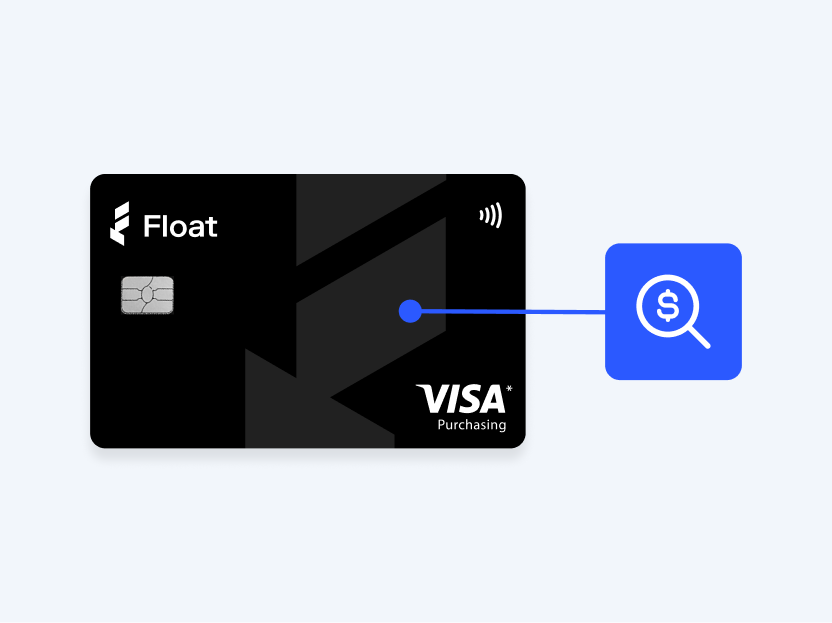
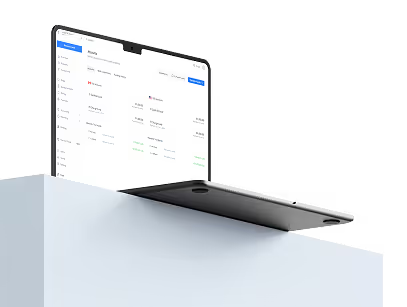
Float’s corporate card has live spend tracking built right into it, so your finance team can see real-time spend data for each card. Not only that, you get custom spend controls by department, budget or individual, in addition to a visual dashboard that enables fast reviews and decision making. Plus, with one click, you can sync Float with accounting tools like QuickBooks, Xero and NetSuite.
“Float provides a level of speed and efficiency that makes me enjoy accounting software like QuickBooks,” says Daniel. “It actually makes my life in QuickBooks easier.”
Learn more about Float’s corporate card today, and get complete visibility into your company’s spending in real time.